Upcoming Webinar: Phosphorus and Cannabis - How much is Enough?

Friday, April 22, 2022

April 28, 12:00 - 1:00 pm EST sets the stage for the next webinar in the GrowON series, organized by extension staff at OMAFRA. As the cost of fertilizer increases, greenhouse growers of all shapes and sizes are looking for ways to optimize nutrient use efficiency in order to manage the costs of the inputs. Phosphorus, being an important nutrient for plant production, is the focus of today's talk. Bill MacDonald, the coordinator of the commercial cannabis program at Niagara College, will talk about the results of phosphorus deficiency trials conducted over the last few years in Cannabis. Following this discussion, there will be a review of other nutrition work that has been done to help dial in the ideal recipe for your crop. 


In September 2018, Niagara College became the first post secondary institute in Canada to obtain a Health Canada license specifically to grow cannabis with the intention of training students. Prior to joining Niagara College, Bill MacDonald owned and managed greenhouses, and spent 8 years consulting in the cannabis industry. He has a Bachelor of Science in Agriculture and a Master of Science in Plant nutrition from the University of Guelph, so he is well versed in all things cannabis nutrition.

If you are interested in learning more about the role Phosphorus plays in your crop, and getting a better idea of the impact of varying nutrient levels on your crop, click here to register for the session. 


Posted by: Talia Plaskett

Cannacopia – Key Concepts for Cannabis Success

Tuesday, April 19, 2022


Introducing the first official workshop hosted by the BloomLabs team! This presentation can be viewed on YouTube at https://www.youtube.com/watch?v=sbb-PNiTFpc. Please follow this link if you’re interested!  

Topics of discussion included the following:

Sarah discusses facility and product overview from Olli Brands Inc., a leader in cannabis edibles in Canada, who has tons of great and unique flavours to try! P.S. You may want to try their chocolate brownies or cookies! Sarah outlines new product development processes and how Olli can help you bring your ideas to life.

Mike, from Professional Cleaning Solutions, discussed cleaning in the industry. Sanitation is a key concept for any cannabis producer to mitigate any mould or mildew, including affecting the environment negatively. Mike chats about topics like training, health and safety, environmental impacts, Good Production Practices (in the Cannabis Regulations!), sanitation and environmental programs, and more!

Dr. Punja discusses the various pathogens in greenhouses, which can be compared to indoor growth as well. Diseases infect roots, foliage, as well as flower and are all important when growing cannabis, especially for disease management. Dr. Punja discusses the types of pathogens, as well as biological controls that can mitigate the diseases. If you have powdery mildew, moulds, root rot, etc., check out this presentation! Afterall, it is very common, cannabis is a live flower!

Ricardo, our Senior Microbiologist at BloomLabs, discusses the concerns with bacterial and mould contaminants. Ricardo walks through the types of bacteria and mould we test for at BloomLabs in cannabis. Cannabis can have some anti-microbial properties, but as it is for human consumption, producers must make sure it’s safe for human health. This presentation identifies contamination points during production and discusses services Bloom offers to help mitigate issues, such as air quality testing, environmental swabbing, etc.

Services from the BloomLabs Cannabis Accelerator Team, Talia and Chelsea, include production services, from seed to sale, including irrigation systems, substrate information, pest management practices, and more! We also offer cannabis edible product development, as well as shelf-life studies! We work with clients from start to finish to get their products to the market. BloomLabs can work with you, either on site or online, to grow your company and products


BloomLabs had a great time hosting this workshop and we plan to host more of these types of information sessions! We allowed for Q&A period which many viewers got to ask specific questions about products or requirements. Please keep an eye out for our next workshop (we’ll also be sending an email out to our current email list, so please reach out if you’d like to hear from us!)!

Considerations for Cannabis Edible Product Development

Friday, April 8, 2022


I think most of us have at moment where we are eating something or see a food product and that little light bulb comes on and we think, “I bet this would make a great edible”. Well, the idea is the easy part, figuring out how to turn that idea into a real product is the challenge. Let’s discuss some of the considerations one must think of when starting the journey of creating a cannabis edible

First here are the product regulations in a nutshell

• A maximum allowable amount of 10mg THC per package

• No regulated limits on CBD

• Products must be shelf-stable – cannot require refrigeration or freezing

• No added caffeine

• No nicotine or added alcohol

• Must be in child-resistant packaging

If you can meet all of these regulations, then you are ready to move onto the next considerations

Typical Forms of Cannabis used in the Development of Edibles

Crude Extract – lower purity range, more of a combination of THC and CBD, more “cannabis flavour,” must use more ingredient to achieve target total mg, therefore, having more of a flavour impact on the product.

Distillate – higher purity as most plant materials and terpenes have been removed, less of a “cannabis” taste. It can have primarily THC or CBD distillate with small percentages of the other present. Do not need as much ingredient to achieve target total mg.

Isolate – a solid crystalline powder that contains 99% purity. The most commonly used isolate is CBD isolate because it allows for products to be made with no THC.

For a cannabis edible you are looking at using a distillate or isolate but it is not as easy as throwing it into your product and calling it a day.

Carriers for Cannabis

Cannabis distillate is quite difficult to work with on its own as it is very thick and sticky at room temperature. For best results, one should heat distillate to between 60-70ÂșC. In this temperature range, distillate becomes more fluid. For best homogeneity results in the product, distillate should be mixed with a carrier to ensure it is distributed throughout the product evenly.

THC and CBD are both fat-soluble, meaning they mix the best with fats and oils. If you are creating a product with a fat or oil in it, the ideal first step is to mix the cannabis into the fat. If you are not creating a product with a fat or oil (e.g. beverage), you need to find a non-fat based carrier that aids in combining the distillate with a non-fat matrix.

Fat based carrier – ensuring the distillate and fat are at the same temperature when combining is very important. If the carrier is cooler than the distillate, it will immediately seize up when combining with the cooler fat. A sufficient mixing time is required to ensure the distillate has been properly distributed throughout the fat.

Non-fat based carrier – since the distillate is going into a water-soluble product, an emulsion or stable suspension must be created to disperse the distillate into the product evenly. Various methods can be trialed to achieve this:

• High shear mixing with carrier and emulsifier

• Nano-emulsions with oil and water—this requires special equipment

• Sprayed dried water-soluble emulsions–this creates a dry product

• Encapsulation

The most suitable method depends on the product you are developing, the costing, production capabilities and the cannabis’s final efficacy. So, choose wisely.

Considerations During Processing

But, wait there is more. How this product is produced can affect many different aspects of the cannabis and final product.

Homogeneity – during the processing of the product you are creating, it is very important to ensure the cannabis is mixed properly, so it is homogeneous throughout the final product. The method of incorporation of the cannabis will determine the length of time required for mixing. For example, if you are adding distillate straight to a fat, it will take longer to incorporate than if you are adding an emulsion to water.

Heat – THC and CBD degrade in the presence of heat over time. When developing a product, it is important to consider the processing parameters if heat is involved. Ideally, the cannabis should be exposed to the least amount of heat for the shortest amount of time possible to minimize degradation but still achieve product stability. If exposed to heat, additional testing should be completed to ensure it has not degraded the THC level to below the specifications.

Acid – exposure to acids can cause THC and CBD to degrade, which can affect the potency. If you are creating a low pH product, you should ensure cannabis degradation is not occurring. This is an important consideration as cannabis edible products may fall in the high acid range due to the requirement of shelf stability.

Packaging Considerations

Now you have everything sorted with the product you must take some time to figure out the proper packaging.

Regulations state that all products must be in a child-resistant (CR) package. As in all product development, when determining the packaging, it is important to consider how it will affect the product. For example, light and oxygen can affect the product over time, but these can be minimized with the proper packaging. You also want to ensure the packaging does not interact with the cannabis, which could cause potencies to be affected.

Stability and Shelf Life

Finally, one of the last thing to consider is the life span of the product.

Edible products must uphold food safety and quality over time, similarly to non-cannabis food products, however, with the addition of maintaining cannabis potency. The cannabis itself can degrade over time, so the shelf life studies for edibles must also ensure the potency of the product remains within the specifications for the duration of the product’s shelf life.


Yes, this is all A LOT! But, that is why the folks at Bloom Labs are here. We can help you take that idea and turn it into reality with our product development services. Take a peek at our website and if you have any questions don’t hesitate to reach out.

https://bloomlabs.ca/product-development/

Below the Surface - What Else is your Soil Test Telling you?

Friday, April 1, 2022

If you haven't watched Perennia's latest webinar on interpretation of soil reports...run, don't walk, to our Youtube channel! (Just kidding, you can also click here). 

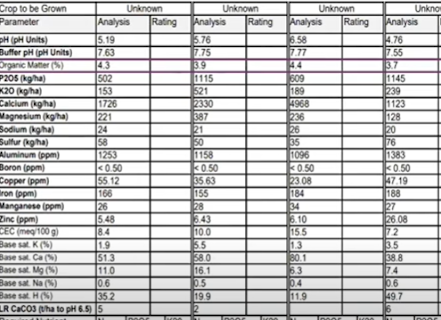
Join our soil specialist Caitlin McCavour as she goes through the results generated from a soil sample submitted to the NSDA testing lab, and further explains what those values mean, and the impact it has on your crop. For the record, while this report might look similar to what is generated for a substrate-based nutrient analysis, they are not the same test! Make sure to double check the analysis you are requesting, and that it is suitable for the growing media you are using in your operation. 

Below you can find some of the questions she answers throughout the webinar: 

Go through the Elements of the Soil Test Report

What is the difference between the posted pH and the buffer pH row?
Where can I find the recommended amount of lime required for pH adjustment?
How do you select the best amendment to increase soil pH ?
Why is organic matter important?
Essential elements for plant production 
What are the ranges used to determine if my levels are low or high?

Cation Exchange Capacity

What influences the ability of a soil to have an increased or decreased ability to hold onto cations?
Who are the acidic and basic players? Are they considered equal in binding capacity?
How is this going to change your management practices?
The role of CEC in timings and volume of fertilizer applications

Base Saturation

What is base saturation?
How is it different from cation exchange capacity?


Rather than trying to summarize all of the awesome information here, I highly recommend you sit through the 52 minute webinar. If you have any questions about your soil test, and the management recommendations that go along with it, don't hesitate to reach out !


Posted by: Talia Plaskett 

Upcoming Plant Health Virtual Conference

Monday, March 14, 2022

  Get those calendars ready folks, we have another greenhouse webinar coming up! This (FREE) virtual event takes place Wednesday March 23 from 12-4pm EST and focuses on various ways to improve on plant health in controlled environments. 


So, what are we going to be hearing about?

Watching Water Quality - 12:20 - 1:05 pm

Water quality is extremely important to consider for protected production, especially in a hydroponic setup. Water quality can impact long-term root-zone pH and EC, as well as root disease susceptibility, pesticide applications, equipment longevity and appropriate fertilizers. Neil Mattson, Associate Professor at Cornell University, will discuss why and how often you should be submitting your water for a quality test. From there, he will review some of the key aspects to focus on when interpreting the results from the lab, as well as highlight some of the things on that report that are slightly less important to help keep us on track. By understanding your water, and the impact it has on your crop, you can help mitigate any water-based headaches around the facility and help improve the overall growing conditions (and productivity) of the crop

The Physics of Spraying in Closed Environments- 1:15 - 2:00 pm

Jason Deveau, the Application Technology Specialist at OMAFRA will explore the physics of spray application methods that are specific to closed environments. By understanding how spray behaves, and through using simple diagnostic methods to characterize your current spray tendency, operators can improve the efficacy and productivity of the products applied in the protected space.

Quality Assessment of Biological Control Agents (BCA): Why It Is Important to Know if your BCA are Alive or Dead - 2:10 -2:55 pm 

Dr. Raymond Cloyd, Professor/Extension Specialist out of Kansas State University will provide an overview of biological control, and then focus in on the importance of developing quality assessments to ensure that your BCA are functional. Functionality is key for successful insect and mite populations, so it is important to implement these assessments into your usual routine!

Growing Media Selection for Optimized Plant Health - 3:05-3:50 pm

Dr. Brian Jackson, Director of Horticultural Substrates Laboratory at North Carolina State University, is going to talk about the importance of selection and management of growing media. When done properly, it is easier to promote root growth and development, which is crucial for overall plant health and success. Additionally, precise water management of substrates/containers at different times over the cropping cycle of plant production can aid in growth regulation as well as the post production shelf life of plants. Dr. Jackson will also comment on new substrates that are entering the marketplace, and talk about how they compare to traditional mixes when it comes to water management. 

______________________________________________________________

This fantastic line up will help get you start your growing season on the right foot, so definitely consider tuning in if you are looking to improve the quality of your greenhouse plants! 

If you are interested in registering, or learning more about the event, click here

Posted by: Talia Plaskett

Dr. Zamir Punja and Cannacopia!

Friday, March 11, 2022

Disease Identification and Management - Key Concepts for Cannabis Success

We are beyond pleased to announce that Dr. Zamir Punja, of Simon Fraser University, will be joining us on March 17th for Perennia's first ever cannabis workshop! He will be chatting with us about identifying the biggest disease-causing agents in cannabis, and providing suggestions for managing them as well! Following his talk, viewers will have the opportunity to chat with Dr. Punja and ask any questions you may have. 

For those of you who aren't familiar with his name, Dr. Zamir Punja is a Professor of Plant Pathology and Biotechnology at Simon Fraser University with expertise in plant pathogens, tissue culture and molecular biology. Before joining Simon Fraser University, Zamir was the was manager of plant biotechnology for Campbell Soup Company where he worked on carrot diseases. Since then, his research has included work with greenhouse vegetables, ginseng, blueberry, and wasabi. Recently his lab has been developing methods for identifying and managing new and emerging diseases of cannabis. Zamir’s work with cannabis has produced many scientific publications and established him as one of the leading cannabis disease researchers in North America.

You will be able to catch Dr. Punja's session at 3:20 AST on March 17th. For more information on our cannabis workshop, or details regarding registration, click here


Workshop Alert - Cannacopia is Coming to A Screen Near You!

Wednesday, March 9, 2022

Introducing...Cannacopia! Perennia's First Ever Webinar Focused on all Things Cannabis!

 Join us for an afternoon of speakers focusing on Key Concepts for Cannabis Success. 

We have enlisted a team of experts to discuss facility sanitation, disease identification and management strategies, as well as hear first hand from about what it takes to start up a successful edible brand.  In addition, the Cannabis scientists at Perennia will be sharing information on most frequently asked questions when it comes to microbial contamination, as well as highlight the scope of services we offer - some even free of charge! Each session will be followed by a question period to help elaborate on anything you want to learn more about. The workshop will finish off with a panel discussion amongst our industry experts, with the opportunity for feedback from the audience as well. 

This free of charge workshop will take place on March 17th from 1-5 pm AST. For more information, or those looking to register, click here


The Importance of Water Activity and Cannabis

Monday, March 7, 2022

 How Water Activity Prevents Microbial Growth

There are specific measures for what we call water activity; another way of saying water activity is internal relative humidity. All those little air pockets inside of the cannabis flower will have a certain relative humidity, which is going to be the same as the water activity in the cannabis plant material itself. There are certain levels of water activity where microbes can grow, for example, the bacteria that we’re worried about grow above the 0.85 water activity level. There are yeasts and moulds that grow in the area between 0.65 and 0.85 water activity, where 0.65 is the accepted limit for mould growth in cannabis. 

Most of your moulds are not going to grow below 0.70 water activity, but some can grow down to 0.65 and there are a few others that can grow down to 0.60 water activity, but those are much less common and not really a concern in cannabis. Values below 0.65 water activity is considered the safe limit for cannabis flower. There are specific levels for water activity below which microbes cannot grow. It doesn’t matter how much water is in the cannabis or in any given product, but it’s a specific level of water activity that determines whether or not microbes can grow. 

Water Activity and Government Compliance

Because this issue with microbial growth is based on water activity, there are specific government compliance parameters for a variety of different products that need to be kept shelf stable. Cannabis is one of those, and there are standards set up in order to help people maintain compliance. One of the standards for cannabis is the ASTM D8196 for determining water activity in cannabis flower.

The Water Activity Sweet Spot for Cannabis

That space between 0.55 and 0.62 water activity tends to be the sweet spot where those moisture levels are just right. Anything above 0.65 you’re going to have potential for microbial growth, so, we really want to be below 0.65. A little bit lower than 0.65 is always helpful because you want to make sure that you’re not going to have issues, give yourself a little bit of leeway, but you also don’t want to be too dry.

If you get too low in water activity level, it causes oxidation of the trichomes, and you have a reaction that leads to loss of terpenes and cannabinoids. If you’re too high in water activity, then the challenge is that you’re going to have fungus growth, yeast growth, or other microbe growth, so maintaining that water activity is really important. 

Water Activity: Fast and Accurate to ±0.003

Something to look at when you’re looking at water activity is that water activity is temperature dependent; as a general rule, higher temperatures lead to higher water activity. For any given product, the change in water activity based on temperature is going to be consistent for specific products. Also, in cannabis, you’ll see that higher temperatures lead to increased rates of decarboxylation. That means we want to maintain a level of water activity or relative humidity in your cannabis flower, even when it ships for distribution and sale. So, if your product does experience higher temperatures, you may see higher water activities that may put you over the acceptable water activity limit, where you might see some microbial growth. 

Being able to protect that humidity level when product leaves your facility and before it’s consumed is important, and you’ll want to be aware and give yourself a little bit of extra leeway. Being closer to the 0.60 or 0.62 water activity level is probably better than being right at 0.65 water activity in case there are temperature fluctuations that the product experiences after it’s packaged.

If you’re looking at 60% relative humidity, that’s the same as saying 0.60 water activity. Relative humidity is expressed in a percent. Water activity doesn’t really have a unit, but we call it water activity or aw. So, it’s the water activity that determines whether or not mold fungus or microbes can grow, and its water activity that determines quality, meaning chemical and physical reaction rates. 

At BloomLabs, we can get an accurate measurement to ± 0.003 aw and a precision of 0.002 aw, which is a very, very specific measurement! You can contact us at bloomlabs.ca to receive more information about our cannabis testing! 

To sum up, we want to dry the product to the right water activity level to hit the sweet spot so that we’re not over drying, causing quality loss and less sales profit, but also, we don’t want to under dry to enable mould and microbial growth!


Posted By: Jay Radadiya

PREVIOUS Bloom to Bud Posts